Wednesday, September 25, 2024


Sunday, July 15, 2018
Saturday, August 23, 2014
Sunday, April 13, 2014
Spring Thaw in the Red lake Water Shed.

Flooded fields soon drain into the ditches that drain into the main rivers.
Combine in Adger township.
Saturday, July 14, 2012
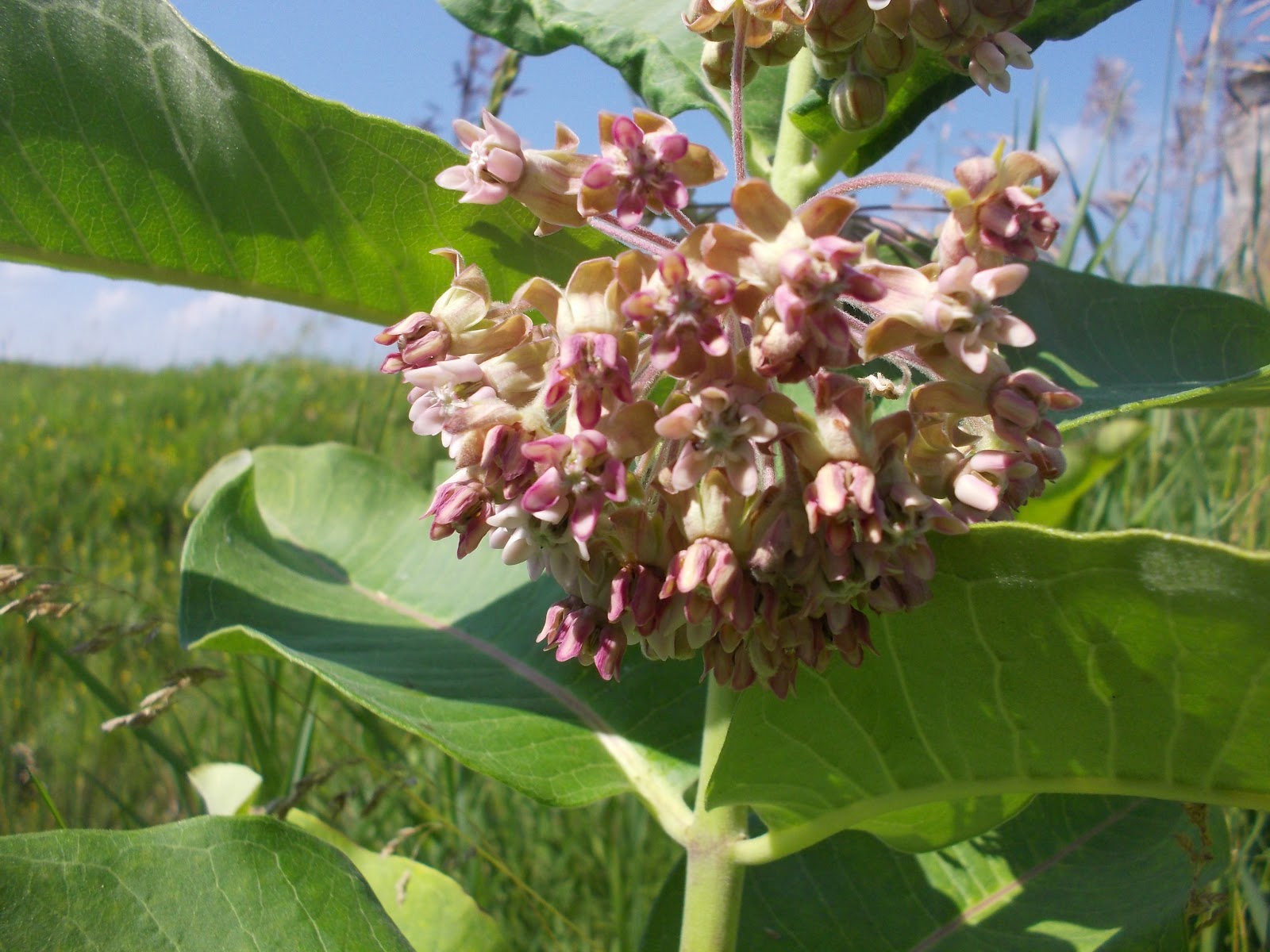
Common Milkweed
Common Milkweed or Asclepias syriaca is one of my favorite weeds. As a kid I liked to pick the dry pods and open them up. The seeds and the fluff lay inside the pod so neatly is a thing of wonder. Then I would pull out seeds and fluff and watch them ride the wind. I would wonder if the fluff attached to the seeds was like cotton in cotton balls and that if it could be spun like cotton. The plant while it was a green was a wonder also because of the sticky milky white sap and the monarch butterfly larva and catapilers that would live on the leaves.

Milkweed fluff was gathered by school children during WWII for filling in life jackets even today it is used as a stuffing for jackets and pillows. The pods while green can be eaten. The stalk of this plant also produces a useful fiber that was used by Native Americans.

Friday, October 14, 2011
North West Corner of Minnesota: Neptune Bridge, Red Lake River Minnesota
North West Corner of Minnesota: Neptune Bridge, Red Lake River Minnesota: In the eastern part of Pennington county where Pennington County highway 27 crosses the Red Lake River is Neptune Bridge. At that Bridge i...
Neptune Bridge, Red Lake River Minnesota

In the eastern part of Pennington county where Pennington County highway 27 crosses the Red Lake River is Neptune Bridge. At that Bridge is the eastern most access to the Red Lake River for boats. The access is improved with rock and concrete. When the river is high and the current is swift it can be difficult to put a boat in. The fishing west of the bridge can be good if you know where the holes are. Fishing can be a challenge on the Red Lake River and most people complain that all they catch are Northern Pike. Crappie fishing used to be very good but has changed over the past few years and it isn't as often you catch a crappie. There are some nice walleye in the river but they are more difficult to catch. East of the bridge is the Red Lake the Reservation. The Reservation is closed to the public.
The interesting part about fishing under this bridge is how the barn swallows have managed to stick their mud nests to a flat smooth surface underneath the bridge. Beakful by beakful theses little birds make up to a thousand trips to build one nest made of mud balls and grass. Reading up on these common birds I learned that they can and sometimes do mate while in flight. Listening to the current lap and echo under the bridge along with the fluttering and chattering barn swallow was relaxing. This area of the river is definitely one of the best places to go if you want to get away from people and cast a fishing line.


Tuesday, October 11, 2011
Open Lines on KTRF Radio

KTRF Radio Station
 One of the more interesting radio shows on KTRF, sponsored by Budget Electronics is Open Lines. It can be heard most week days in the late morning before noon. Many of the guests and subjects are local with Mark Allen hosting and Marty Collins, owner of Budget Electronics a regular guest, Some of the subjects talked about can be local, national or world subjects. No one really knows where the conversation will go especially when guests call in. There really isn't a call screener or producer to limit who calls in, so almost anything can be said. Above is a screen shot of TRFradio.com's web site where you can click on and listen to past Open Lines shows.
Sunday, October 9, 2011
Wildfire in Greenbush

The local news WDAZ-TV thinks Greenbush is too small to mention so they say repeatedly west of Roseau Minnesota, like anyone knows were Roseau is more than Greenbush. With the wind and the warm dry conditions a fire was a real danger. The Roseau River Wild Life Management Area is where the fire is concentrated. This area is a tinder box of brush, dry grass and cattails.

Friday, September 9, 2011
Angus Minnesota
Angus is nothing more now than a collection of houses, large grain elevators, a church and the township hall. I never really thought about Angus, until I took county highway 23 heading west to go to Grand Forks. I took this route because there are not any speed traps except one and that is the bump off of the BNSF railroad that runs next to US Highway 75. This bump has now been fixed but at that time you could do the Dukes of Hazzard across Highway 75.
The post office shown below was on the north west corner of County 23 and Highway 75 but was recently demolished. If you are someone who likes the iconic look of tall grain elevators rising out of the flat plain of the prairie then you will like the short drive through Angus. BNSF Elevator Directory lists some of them as belonging to Angus Coop Elevator.


Saturday, August 27, 2011
The Chippewa Treaty at the Old Crossing of Red Lake River.

From the 1840's to the 1870's thousands of two wheel ox carts came and went from St. Paul Minnesota to the Red River Colony (Winnipeg, Manitoba, Canada). They carried badly needed trade goods through forested and swampy areas of north western Minnesota. The route used between St. Paul and Winnipeg became known as the "Woods Trail" because of the forested area south of Detroit Lakes. Locally the trail is called the Pembina Trail. The more westerly trail along the Red River of the North was dangerous because of attacks by the Dakota Sioux, so ox cart drivers began using the Woods Trail which was in an area controled by the Ojibwe then known as the Chippewa. In 1863, the lands in Northwestern Minnesota belonging to the Ojibwe were ceded to the United States at Hout, Minnesota.

The Red Lake Band and the Pembina Band of Ojibwe signed away their ownership to over 5,000,000 acres of very fertile lands of the Red River Valley land extending 30 miles on each side of the Red River of the North. This was the sixth session of land in Minnesota by the Ojibwe and it opened up homesteading after the Civil War primarily as a reward to the displaced veterans who had served the Union Forces. There was also pressure from an influx of immigrants from northern European countries looking for land.
The treaty was misrepresented to the Ojibwe bands with some show of force as a needed route for trade and travel and not as a land grab. Episcopal Bishop Henry Whipple stated sometime after the treaty was signed that the treaty was "from beginning to end a fraud...".
Friday, August 19, 2011
Federal Airborne Reaction Twits (F.A.R.T.) screw Minnesotans
 The Devils Lake Journal reported in an article titled "clearing air may raise power costs in MN, ND", that a federal program to "cut haze in natural areas like national parks" will raise electric rates even more. The only haze that is polluting this area of Minnesota and North Dakota is from the hot air coming from politicians and bureaucrats.
Kristi Schlosser Carlson, an attorney for Minnkota, said early tests also show the EPA's technology will not work with the lignite coal used in Minnkota's plant. Schlosser Carlson said the cooperative prefers a technology that cleans the air without more big rate increases for members. What the EPA wants would cost a half billion dollars but visibility improvements would not be noticeably. Half a billion dollars from the people of Minnesota and North Dakota who cannot afford it with no visible improvements and no one will say anything because no one want to be accused of being on the side of pollution. Just shut up and pay the bill even if it is a stupid fix that does not work.
Bufo hemiophrys (Canadian Toad)

 While mowing the lawn I came across quite a few of these little toads. The Canadian toad also known as the Dakota toad or the Manitoba Toad is remarkable because it survives the cold winters of this area. The cranial boss or bump between the eyes is the only way to distinguish this toad from the American toad. This little guy survives the winter in a burrow below frost line. Many will overwinters communally within small earth mounds, called mima mounds. These mounds sometimes hold several hundred toads over the winter. It would be interesting to find one of these mounds in the fall and spring to see what it looks like. Canadian toads have glands in their skin that puts off a bad tasting liquid that can make animals that try to eat them sick. You will find that this liquid squirts out of them as soon as you try to pick one up.
Wednesday, July 6, 2011
Clearwater Lake MN East of Clearbrook

One of the most attractive lakes in North West Minnesota is Clearwater Lake and true to its name the water is realitively clear for this area. There is very little published information on this lake and I could find very little information online about it. I would need to go to the county seat of Clearwater County, which is Bagley, Minnesota and do the paper and pen type of reasearch there. What I have found online is that the Clearwater lake as we know it is the result of gravity dam on the Clearwater River. It is owned by the state of Minnesota and has been there since 1931. The length is sixty feet and County Highway 4 uses the dam to cross the river. What is really nice is there are a number of islands on the west side of the lake and a few of the islands have homes and cabins on them.

Saturday, July 2, 2011
DNR's Web site is Closed but Gov. Dayton's is up
 Without really thinking about the government shutdown I logged on to the computer after coffee and wanted to find the access to a lake I had never fished on. Well that was a dead end because the MN DNR shut down their site "MN Lake Finder" because of the budget impasse. I tried other DNR sites, all of which are shut down. Then, I thought to myself "I bet the governors web site is up and running". I was right on the money. It is up and running and there is a place to contact him with your thoughts.
 Now I just wanted lake access information, no big deal, but other people have had to cancel plans because the parks are closed. Some have had made reservations a year or more in advance and payed for them, but yet the governor's site is up.
There are two questions. Number one question if a revenue generating site like the DNR's is compelled to shut down, then why is the governor's still up and running? Number two, is this being done for political reasons?
Blame who you want, any politician who has a Minnesota government fund site up and running should have it shut down and that includes the Governor Dayton.
Thursday, June 30, 2011
You Don't Need No Fricking Fishing license!

Midnight, June 30th is the cut off for the purchase of fishing licenses, so says the state Minnesota, but the DNR will still catch you if you are over the limit. Whats funny is the FAQ that the DNR has put out. Fishing is of course number 2 and 3 on the FAQ. This says quite alot about Minnesotans and what matters to them.
Here is the FAQ:
2. Am I still able to purchase a fishing license?
No. The sale of all fishing, hunting and trapping licenses, including online and telephone sales, will be suspended as of midnight, June 30. Likewise, no boat, ATV or other licenses will be sold.
All natural resource and license laws will remain in effect during a shutdown and will be enforced.
3. What are the implications for a shutdown to anglers?
Licensed anglers can continue to fish. All existing rules and regulations will be in force. A mid-season walleye fishing regulation adjustment on Lake Mille Lacs will be delayed or cancelled depending upon the length of the shutdown.
I understand the need for the DNR to enforce fishing laws but wouldn't selling licenses bring in much needed revenue for the state?
Here is the FAQ:
2. Am I still able to purchase a fishing license?
No. The sale of all fishing, hunting and trapping licenses, including online and telephone sales, will be suspended as of midnight, June 30. Likewise, no boat, ATV or other licenses will be sold.
All natural resource and license laws will remain in effect during a shutdown and will be enforced.
3. What are the implications for a shutdown to anglers?
Licensed anglers can continue to fish. All existing rules and regulations will be in force. A mid-season walleye fishing regulation adjustment on Lake Mille Lacs will be delayed or cancelled depending upon the length of the shutdown.
I understand the need for the DNR to enforce fishing laws but wouldn't selling licenses bring in much needed revenue for the state?
Powassan Virus In Minnesota
According to the Winona Daily News the first death in Minnesota was recorded on Wednesday June 28, 2011. The Winona Daily News goes on to tell the history of the virus, where it has occurred and how it is spread.
It is spread by deer ticks in this area. Scientific name is Ixodes Scapularis. While this article contains good information, it leaves out one important thing. What a deer tick looks like and also what a deer tick looks like compared to a wood tick.
I hate ticks and I have found only one way to avoid them and that is stay indoors. That is not going to happen. Winter is long and outside is where I am going to be. So do the normal stuff, wear the right clothes, wear deet and eat garlic and don't freak out if you can help it when you find a tick. Below are a couple of pictures of deer ticks and wood ticks.
Wood Tick, Dermacentor Andersoni
Deer Tick, Ixodes Scapularis

Sunday, June 5, 2011
Thief River and Chief Mons-o-mo (Chief Moose Dung)

City of Thief River makes changes to cover up Name??????
This has been bothering me for some time and I have questions that I cannot find answers for and I hope someone who sees this may post an answer. I love history and I love Native American history and with great respect for those who have passed before us I would like to shed light on something that maybe is not quite accurate. The picture on the left according to what is written on the base of the Statue is of Chief Red Robe. Now Chief (Mis-co-co-noy-a) Red Robe was a real Chief and the Picture the writing on the statue base is correct, but the likeness is of Chief Mons-o-mo (Chief Moose-dung, translated). This name unfortunately brings giggles to small minded people. I have no idea why he had such a name but the culture of Natives Americans and other in that time period was different than today. The reason I know this is the likeness of Chief Mons-0-mo is because the statue was modeled after the photograph shown below which is of Chief Mons-o-mo.

There is also another photo that I found that was scanned from a post card that dates maybe back to the 50's or 60's. I am not certain of this time period or where this statue was at in the City of Thief River Falls when the photo was taken, but it certainly was a different color. What ever the reason prudishness or political correctness this should corrected out of respect for those involved, but I doubt it ever will.
 The Statue of Chief Red Robe can be found just south of the Red Lake River Fishing Pier off of Highway 1 near Northland Community Technical College in a very nice park at the point where the Thief River joins the Red Lake River. It is worth the time to stop and take a look.
 Monday, May 30, 2011
local gas prices in North West Minnesota

According to the New York Post, Goldman Sachs is predicting high gas prices this summer. They are predicting prices around $5 a gallon even though we have seen a drop in the price before Memorial day when prices are normally high. The price increase is to come mid July. Right now the cool weather and wind is affecting my decision to drive to nearby lakes to fish. Where and how far I go may be affected by high gas. The amount spent on gas for both boat and truck really cuts into the food and drinks I put into my cooler and the distance I go to fish. If I drive far enough that may mean a tank fill going and a tank fill coming back. I know from talking to gas station owners that high gas prices hurt them. People have less money after filling the car or truck to spend on beer,soda pop, snacks, and bait. The gas stations only make a fixed percentage off of gas sold and most of the profits come from items like food and soda. So in effect I will make food at home and bring Ice tea and avoid buying high priced supplies at the gas station if I can help it.
Saturday, May 14, 2011
Bird Brains

One of the enjoyable things about this area of Northern Minnesota is the wildlife and one of the hobbies of home owners and land owners is feeding birds, squirrels and deer. It is very common to see back yard feeders and there are whole sections in retail stores dedicated to the back yard feeding of birds. In quite a few homes you will see a window with a chair and a bird identification book. Every season brings new species of birds to the back yard from common to rare with out even having to leave the comfort of your home. In this area you can see species of birds that some bird watchers travel thousands of miles to see.
That is why it was shocking to read about Cuyahoga Falls City council trying to pass an ordinance to regulate bird feeders. The argument is that spill from feeders falls to the ground and decays and causes birds to become sick and die. Jerry James, city councilman alleges that the death of bird was traced back to decayed seed from bird feeders. It was not stated how they came to this conclusion. Was there a biologist or veterinarian involved in the biopsy of these birds? If there was some scientific investigation nothing was put out there for the public to see.
When you read about this kind of news you wonder when some do-gooder will porpose the same type of legislation for your area to "save the little animals" from the bad humans so that they will get votes at the next election. Many who live here are close to nature and have a great concern for nature and will do anything they can to conserve nature without the extra help of new laws.
From Jerry James's statement to Akron News Now, you can conclude he knows very little about bird feeding. You would have to assume that people are dumping fifty pound sacks of feed onto thier lawns for birds to feed on, and that ankle deep piles of feed are rotting on the ground. This is probably the idea that Jerry James has about people who feed birds. The truth is bird seed is expensive and most people who feed birds want very little waste. The other truth is that wild birds are quite finiky about what they eat and different species eat in different ways and varied types of seed. A good example of this is that you probably will not see an American finch or House Wren eating wheat or milo seed. If the Cuyahoga Council was serious that would have stated what types of rotted seed had caused bird deaths. My guess is that they don't have a clue. For many birds you want to attract them with expensive types of seed such as Nyjer seed.
According to the Cuyahoga Falls Patch Chris Stranahan, owner of Wild Birds Unlimited Franchise says: "I've seen nothing posted on th ODNR (Ohio Department of Natural Resorces) website" about birds mortality from decayed bird seed.
Subscribe to:
Comments (Atom)