Search This Blog

Saturday, July 14, 2012

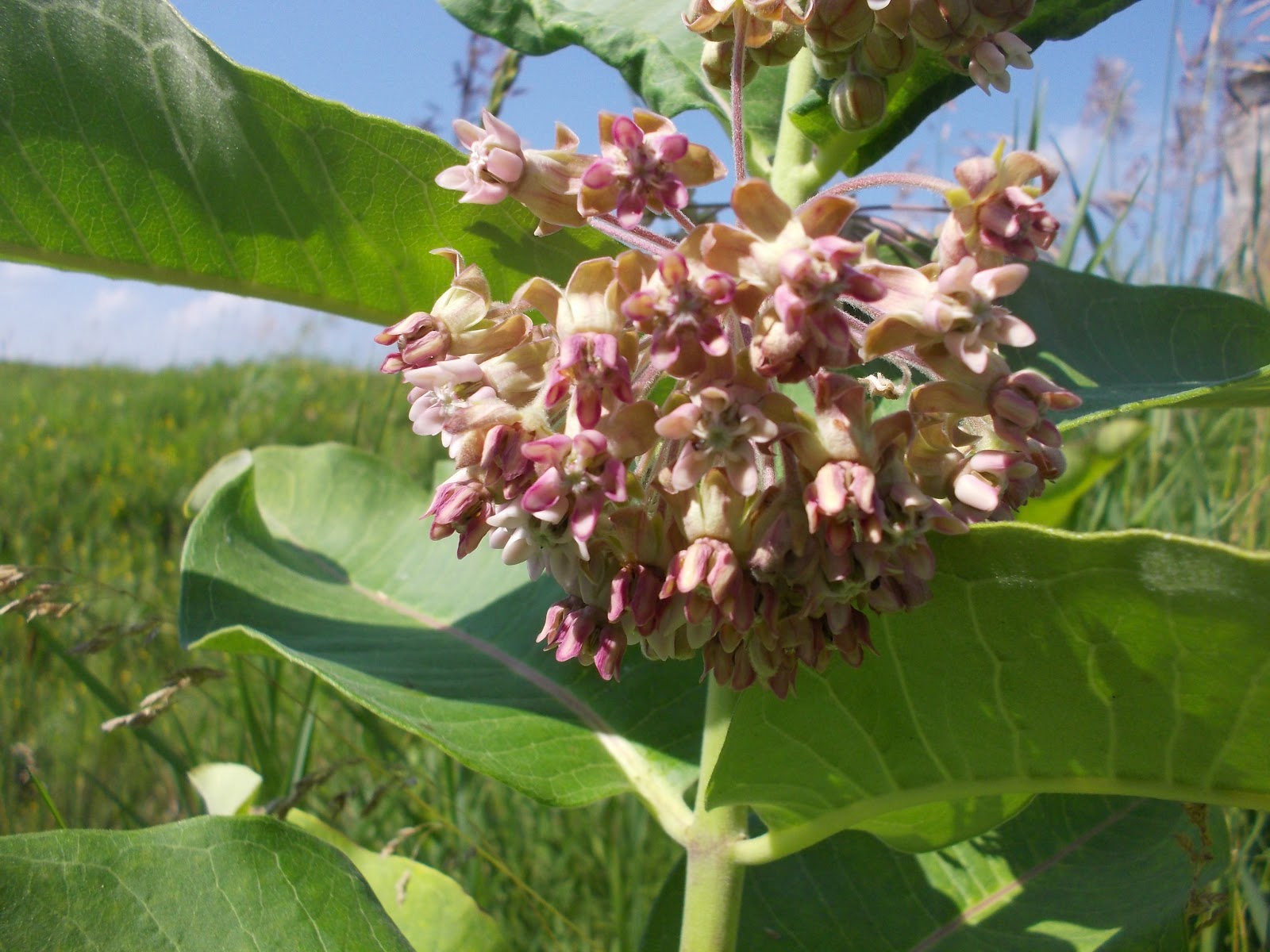
Common Milkweed


Common Milkweed or Asclepias syriaca is one of my favorite weeds. As a kid I liked to pick the dry pods and open them up. The seeds and the fluff lay inside the pod so neatly is a thing of wonder. Then I would pull out seeds and fluff and watch them ride the wind. I would wonder if the fluff attached to the seeds was like cotton in cotton balls and that if it could be spun like cotton. The plant while it was a green was a wonder also because of the sticky milky white sap and the monarch butterfly larva and catapilers that would live on the leaves.

Milkweed fluff was gathered by school children during WWII for filling in life jackets even today it is used as a stuffing for jackets and pillows. The pods while green can be eaten. The stalk of this plant also produces a useful fiber that was used by Native Americans.

Friday, October 14, 2011

North West Corner of Minnesota: Neptune Bridge, Red Lake River Minnesota

North West Corner of Minnesota: Neptune Bridge, Red Lake River Minnesota: In the eastern part of Pennington county where Pennington County highway 27 crosses the Red Lake River is Neptune Bridge. At that Bridge i...

Neptune Bridge, Red Lake River Minnesota


In the eastern part of Pennington county where Pennington County highway 27 crosses the Red Lake River is Neptune Bridge. At that Bridge is the eastern most access to the Red Lake River for boats. The access is improved with rock and concrete. When the river is high and the current is swift it can be difficult to put a boat in. The fishing west of the bridge can be good if you know where the holes are. Fishing can be a challenge on the Red Lake River and most people complain that all they catch are Northern Pike. Crappie fishing used to be very good but has changed over the past few years and it isn't as often you catch a crappie. There are some nice walleye in the river but they are more difficult to catch. East of the bridge is the Red Lake the Reservation. The Reservation is closed to the public.

The interesting part about fishing under this bridge is how the barn swallows have managed to stick their mud nests to a flat smooth surface underneath the bridge. Beakful by beakful theses little birds make up to a thousand trips to build one nest made of mud balls and grass. Reading up on these common birds I learned that they can and sometimes do mate while in flight. Listening to the current lap and echo under the bridge along with the fluttering and chattering barn swallow was relaxing. This area of the river is definitely one of the best places to go if you want to get away from people and cast a fishing line.


Tuesday, October 11, 2011

Open Lines on KTRF Radio

KTRF Radio Station
One of the more interesting radio shows on KTRF, sponsored by Budget Electronics is Open Lines. It can be heard most week days in the late morning before noon. Many of the guests and subjects are local with Mark Allen hosting and Marty Collins, owner of Budget Electronics a regular guest, Some of the subjects talked about can be local, national or world subjects. No one really knows where the conversation will go especially when guests call in. There really isn't a call screener or producer to limit who calls in, so almost anything can be said. Above is a screen shot of TRFradio.com's web site where you can click on and listen to past Open Lines shows.

Sunday, October 9, 2011

Wildfire in Greenbush


The local news WDAZ-TV thinks Greenbush is too small to mention so they say repeatedly west of Roseau Minnesota, like anyone knows were Roseau is more than Greenbush. With the wind and the warm dry conditions a fire was a real danger. The Roseau River Wild Life Management Area is where the fire is concentrated. This area is a tinder box of brush, dry grass and cattails.


Friday, September 9, 2011

Angus Minnesota

Angus is nothing more now than a collection of houses, large grain elevators, a church and the township hall. I never really thought about Angus, until I took county highway 23 heading west to go to Grand Forks. I took this route because there are not any speed traps except one and that is the bump off of the BNSF railroad that runs next to US Highway 75. This bump has now been fixed but at that time you could do the Dukes of Hazzard across Highway 75.

The post office shown below was on the north west corner of County 23 and Highway 75 but was recently demolished. If you are someone who likes the iconic look of tall grain elevators rising out of the flat plain of the prairie then you will like the short drive through Angus. BNSF Elevator Directory lists some of them as belonging to Angus Coop Elevator.

Saturday, August 27, 2011

The Chippewa Treaty at the Old Crossing of Red Lake River.


From the 1840's to the 1870's thousands of two wheel ox carts came and went from St. Paul Minnesota to the Red River Colony (Winnipeg, Manitoba, Canada). They carried badly needed trade goods through forested and swampy areas of north western Minnesota. The route used between St. Paul and Winnipeg became known as the "Woods Trail" because of the forested area south of Detroit Lakes. Locally the trail is called the Pembina Trail. The more westerly trail along the Red River of the North was dangerous because of attacks by the Dakota Sioux, so ox cart drivers began using the Woods Trail which was in an area controled by the Ojibwe then known as the Chippewa. In 1863, the lands in Northwestern Minnesota belonging to the Ojibwe were ceded to the United States at Hout, Minnesota.

The Red Lake Band and the Pembina Band of Ojibwe signed away their ownership to over 5,000,000 acres of very fertile lands of the Red River Valley land extending 30 miles on each side of the Red River of the North. This was the sixth session of land in Minnesota by the Ojibwe and it opened up homesteading after the Civil War primarily as a reward to the displaced veterans who had served the Union Forces. There was also pressure from an influx of immigrants from northern European countries looking for land.

The treaty was misrepresented to the Ojibwe bands with some show of force as a needed route for trade and travel and not as a land grab. Episcopal Bishop Henry Whipple stated sometime after the treaty was signed that the treaty was "from beginning to end a fraud...".